Homelessness and the pushback against hopelessness - at a time of growing privilege and inequality
The latest UBS Global Wealth Report for 2026 was published recently. It found that global personal wealth grew by 10.8% in 2025, the fastest increase in years, and nearly one million new US-dollar millionaires were created in a single year. At the same time, UBS noted that median wealth fell in most countries, indicating that wealth gains were concentrated among those who were already better off. Even more strikingly, the number of billionaires rose to a record 3,302 globally, while their combined wealth increased by about 25% in a year, significantly faster than the growth in wealth for the population as a whole.
We may read statistics like this and think "Where does this put me? I am not rich. I do not feel any of the positive impacts of these supposed monumental increments in wealth. This is just the elite and not my reality."
However, as most of our volunteers will confirm, we are healthy, educated, young adults living in London with housing, food, clean water, freedom of movement, legal protections, internet access, healthcare and access to the labour market. In terms of overall life chances, we are better off than at least 80–90% of humanity today, and arguably more than 95% of all humans who have ever lived. We may not feel wealthy, but we are in environments that billions could only dream of:
- We have a recognised educational certification.
- We have access to one of the world's largest job markets.
- We have universal healthcare.
- We have functioning infrastructure.
- We are not fleeing war, poverty or persecution- although some of our parents or grandparents did.
- We have legal rights that are broadly enforced.
In her autobiography "Loaves and Fishes," published in 1963, American journalist, social activist, Catholic convert and co-founder of the Catholic Worker Movement, Dorothy Day famously wrote: "No one has a right to sit down and feel hopeless. There's too much work to do."
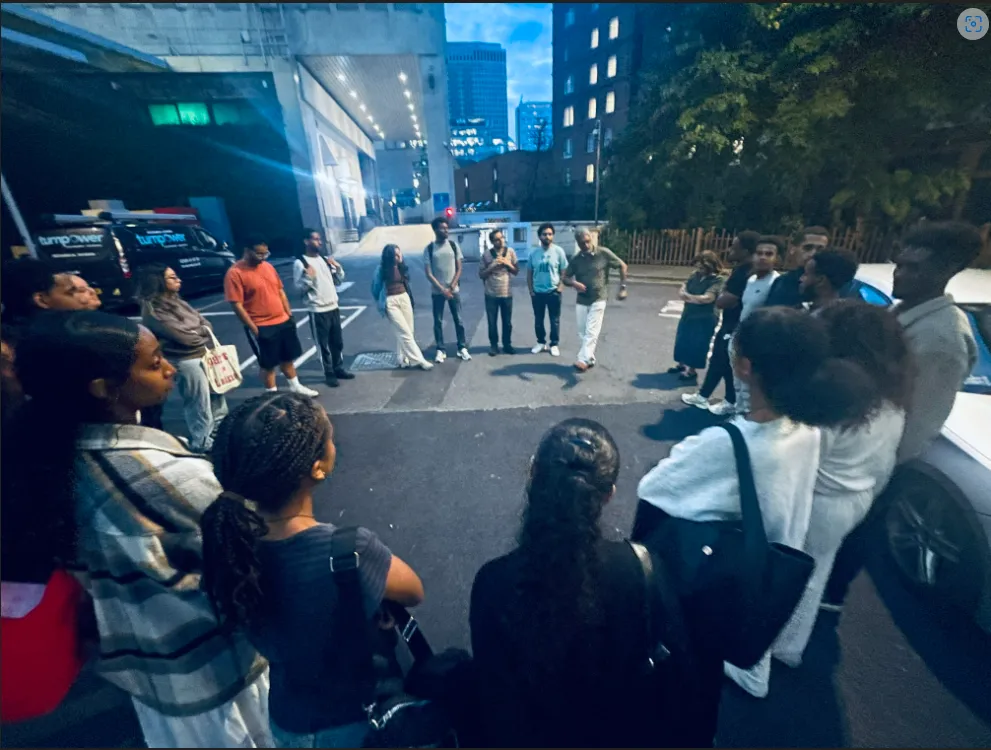
And whether we have great faith, little faith, or no faith, we find this is exactly what our volunteers have chosen to do. Volunteering is not about survivor guilt. It's about recognising that we have won a lottery of circumstance and deciding that some of our time should be invested in people who have not. Volunteering is one of the few ways we can actively push back against the growing distance between prosperity and poverty. It doesn't require wealth, political power or religious belief. It requires only the willingness to see another person's dignity and act upon it. Our volunteers believe fundamentally in fairness, community and human solidarity. And all are welcome to joins us: you don't need to believe in God to believe that no one should be left behind.
A Small Investment from us, A Lasting Impact for society
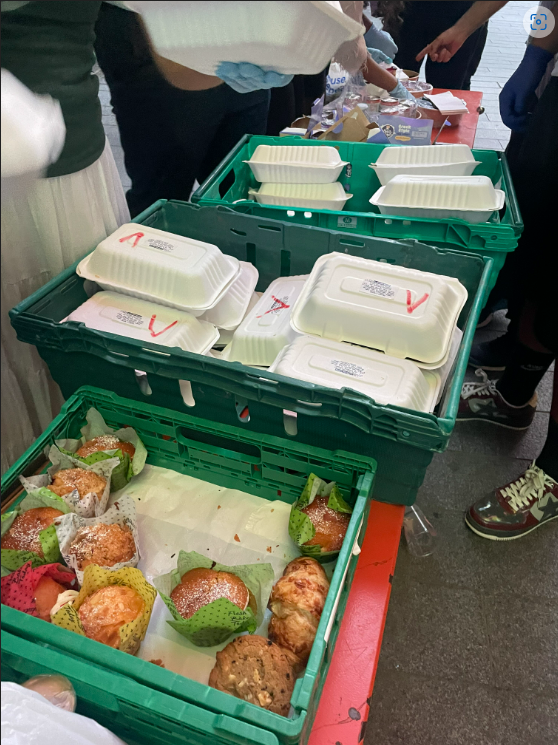
At a time when wealth is growing faster than ever for some, it is easy to feel that the world's problems are too large for ordinary people to influence. Homelessness can seem like a political problem, an economic problem, or someone else's responsibility. But every week, our volunteers remind us that meaningful change often begins with something much simpler: showing up. A hot meal, a listening ear, a conversation that restores dignity, or simply recognising someone whom society has learned to overlook can make a real difference. We may not be able to solve homelessness on our own, but we can ensure that fewer people face it alone.
Whether you are motivated by faith, compassion, gratitude, social justice, or a desire to strengthen your community, there is a place for you at Coptic City Mission. If you have benefited from the opportunities that life has given you, consider investing just a small part of your time in someone who has had fewer of them.
Don't wait until you feel qualified enough or wealthy enough. The people we serve need kindness, commitment, and human connection.
Join us. Help us push back against hopelessness. Because no matter what we believe, we can all agree that no one should be left behind.
Statistics to think about:
About 10% of the world's population lives in extreme poverty.
• About 14% of adults remain illiterate globally, meaning around 86% can read and write.
• Around 74% of the world's population has access to safely managed drinking water, leaving 2.1 billion people without it.
• Roughly 1.4% of humanity is currently forcibly displaced by conflict, persecution or violence.
• More than 1 billion people live in fragile or conflict-affected states, where life chances are substantially lower even when people are not refugees.
• The UN's Multidimensional Poverty Index estimates 1.1 billion people experience acute multidimensional poverty, lacking combinations of housing, sanitation, nutrition, education, electricity and other basic necessities.
References:
> UBS Wealth Report 2026: https://www.ubs.com/global/en/wealthmanagement/insights/global-wealth-report.html
> UNICEF: https://data.unicef.org/topic/water-and-sanitation/drinking-water/
> UNDP: https://hdr.undp.org/content/2025-global-multidimensional-poverty-index-mpi#/indicies/MPI
> World Bank: https://thedocs.worldbank.org/en/doc/229ff18129687a785f08af7cfb28e5e1-0350012025/original/WBG-Poverty-and-Inequality-Update-Fall-2025.pdf
