Homelessness and Immigration
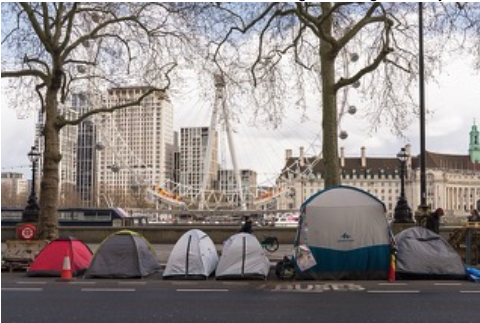
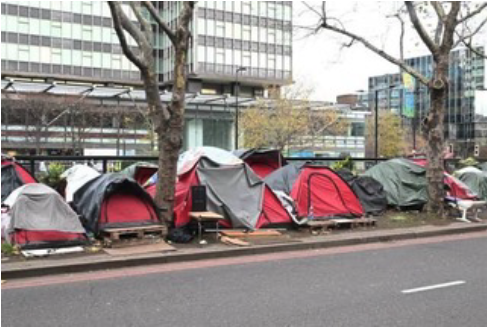
Less than a month ago, a video investigation for Underground UK by Mimi Yates was doing the rounds on instagram. She spent 3 weeks visiting the tent villages popping up around central London. She found out something shocking: that many of them had jobs and the right to work here legally, mainly as food delivery drivers. While they delivered expensive meals to their customers, they relied on soup kitchens to survive. They had to pay to rent their bikes, pay to purchase their equipment such as the insulated branded bags and jackets and data for their phones - however, they were not getting paid enough to cover even shared rooms or hostel accommodation. Despite working up 70-90 hours a week, they were earning less than half the minimum wage, very often living off this, trying to save some for a deposit on a rental and also trying to send some abroad to support desperate dependants.
For many Londoners, this may seem shocking. But for us at City Mission, we are all-too aware of this crisis. The rise in zero hours contracts, often sold as the primary benefit of the gig economy offering ‘flexible’ hours becomes the thing that traps the workers in a cycle of debt and hopelessness. One incident of bad luck can have catastrophic impact on their mental and physical wellbeing: having their bike stolen, or their phone, or being clipped by a careless driver to end up in hospital and then turned out on the streets with no bike, phone, shelter, or hope of regaining any of them… needing to start from scratch all over again. Can you imagine what your life feels like at the mercy of an algorithm? Imagine camping out at the mercy of the elements, waiting for the next ping of a job - only to make as little as £2.80 per drop off and this is even less when the algorithm ’stacks’ the deliveries so they are scheduled back to back from the same pick up locations.
The lack of a safety net (sick pay, holiday pay, minimum provision of safety and equipment to carry out their jobs) means that those with no family to fall back on for those who have emigrated here (legally or otherwise) have no buffer between them and homelessness. The investigation pointed out that many had the right to reside here, as well as the right to work.
They held degrees in economics, nursing and other specialist subjects. However, the lack of opportunities, training and pathways to steady work meant they had to take up the quickest and easiest method to cover their immediate needs of food and shelter upon arrival or upon graduation.
Those who have arrive here, having pawned off the last of their possessions, leave behind entire households waiting in expectation for them to ‘make it’. Once here, the heartlessness reality hits hard. There is no welcome. It is a 'hostile environment’. There is no safety net for those fleeing wars, famine, political instability and untold hardships. It is worth pointing out that for those fleeing the worst atrocities, there are currently no safe legal routes to emigrate to the UK, even when you have existing family ties here.
This situation can easily can be anyone who cannot go home, whether they have emigrated here or not: whether it is due to domestic abuse, family passing away, exiting the foster care system, or threats due to coming out, religious coercion or honour violence. For those whoarrive legally to study, with their families taking on untold levels of debt in order to give them a chance of success means that entire households depend on one person for their future health and care needs. The sheer sense of duty can drive a person to desperation. And if they fail they will have let down not just themselves but everyone who invested in them: parents, grandparents, spouses and children.
We ask that when you read the headlines about ‘’illegal immigrants’ and ‘small boats’ you see what we see: real stories of resilience, patience in the face of doors slammed shut, with courage in the face of adversity and smiles despite enduring untold hardships in their journeys to simply provide a stable income to feed and educate and clothe their families.
Obligations under International and Domestic Law:
• 1951 Refugee Convention: The UK is a signatory to the 1951 Convention, which prohibits the expulsion or return ("refouler") of refugees to territories where their life or freedom would be threatened on account of race, religion, nationality, membership of a particular social group, or political opinion.
• ECHR and Human Rights Act 1998: The UK cannot return individuals to a country where they face a real risk of torture, inhuman, or degrading treatment (Article 3) or a threat to their life (Article 2).
• Famine and Humanitarian Crisis: While the 1951 Convention specifically addresses persecution, Article 3 of the ECHR can apply to situations of extreme indiscriminate violence or severe humanitarian crises (such as widespread famine) if returning someone would breach fundamental rights.
• Modern Slavery Act 2015: Obligations exist to protect victims of trafficking and modern slavery, particularly those forced into dangerous journeys.
Homelessness, Immigration & Rights in the UK
• Soaring Homelessness Among Refugees: There has been a five-fold increase in the number of refugee households in England who are homeless or at risk of homelessness, rising from 3,560 in 2021/22 to 19,310 in 2024/25.
• Asylum Accommodation Evictions: A key cause of this surge is the change in government policy, where refugees are evicted from asylum accommodation shortly after being granted status, leaving them limited time to find housing.
• Asylum Seeker Rights: People seeking asylum do not have the automatic "right to rent" as they lack leave to remain, though they may be granted "permission to rent" (PTR) by the Home Office.
While in the asylum process, they can receive accommodation and £49.18 a week for food, clothing, and toiletries but this is not guaranteed as some asylum seekers have the right to remain in the country while their applications are being processed but are not granted the right to work OR the right to access public funds - leaving them at the mercy of begging or depending on charitable donations to survive.
Bible verses to meditate upon:
Exodus 22:21: "Do not mistreat or oppress a foreigner, for you were foreigners in Egypt.”(NIV).
Exodus 23:9: "Do not oppress a foreigner; you yourselves know how it feels to be foreigners, because you were foreigners in Egypt." (NIV).
Leviticus 19:33-34: "When a foreigner resides among you in your land, do not mistreat them. 34 The foreigner residing among you must be treated as your native-born. Love them as yourself, for you were foreigners in Egypt. I am the Lord your God." (NIV).
Deuteronomy 10:19: "And you are to love those who are foreigners, for you yourselves were foreigners in Egypt.” (NIV).
Deuteronomy 24:14: "Do not take advantage of a hired worker who is poor and needy, whether that worker is a fellow Israelite or a foreigner residing in one of your towns" (NIV)